
Empowering your business with scalable, secure, and highly efficient logistics solutions tailored to your unique supply chain needs.
Environmental, Social, and Governance (ESG) criteria are no longer mere corporate buzzwords; they represent strict compliance frameworks dictating the future of modern commerce. Major Australian retailers, government agencies, and multinational corporations are aggressively auditing their supply chains, seeking to eradicate Scope 3 emissions (indirect emissions occurring in a company's value chain). Transport and logistics historically represent the heaviest carbon footprint within these chains. Therefore, the mandate for transport providers is unequivocally clear: transition toward zero-emission freight networks, or face obsolescence.
At MJP Logistics, we have moved beyond theoretical environmentalism and are actively engineering the transition to electric and hybrid logistics architectures. The challenge in a state as vast as Victoria is balancing the operational range limitations of current battery technologies with the immense power required to haul heavy freight. While long-haul interstate trucking remains tethered to diesel due to the lack of charging infrastructure in the outback, the urban and suburban 'last-mile' distribution networks are prime for immediate electrification.
"Decarbonizing the supply chain is no longer an ethical preference; it is a commercial prerequisite for securing major corporate and government freight contracts."
Urban delivery is characterized by stop-and-go traffic, constant idling, and high brake usage—conditions that absolutely devastate diesel fuel efficiency but are perfectly suited for Electric Vehicles (EVs) utilizing regenerative braking. By replacing localized metropolitan delivery vans with EV counterparts, logistics companies can drastically slash their operational fuel costs while instantly neutralizing their carbon emissions in densely populated areas.
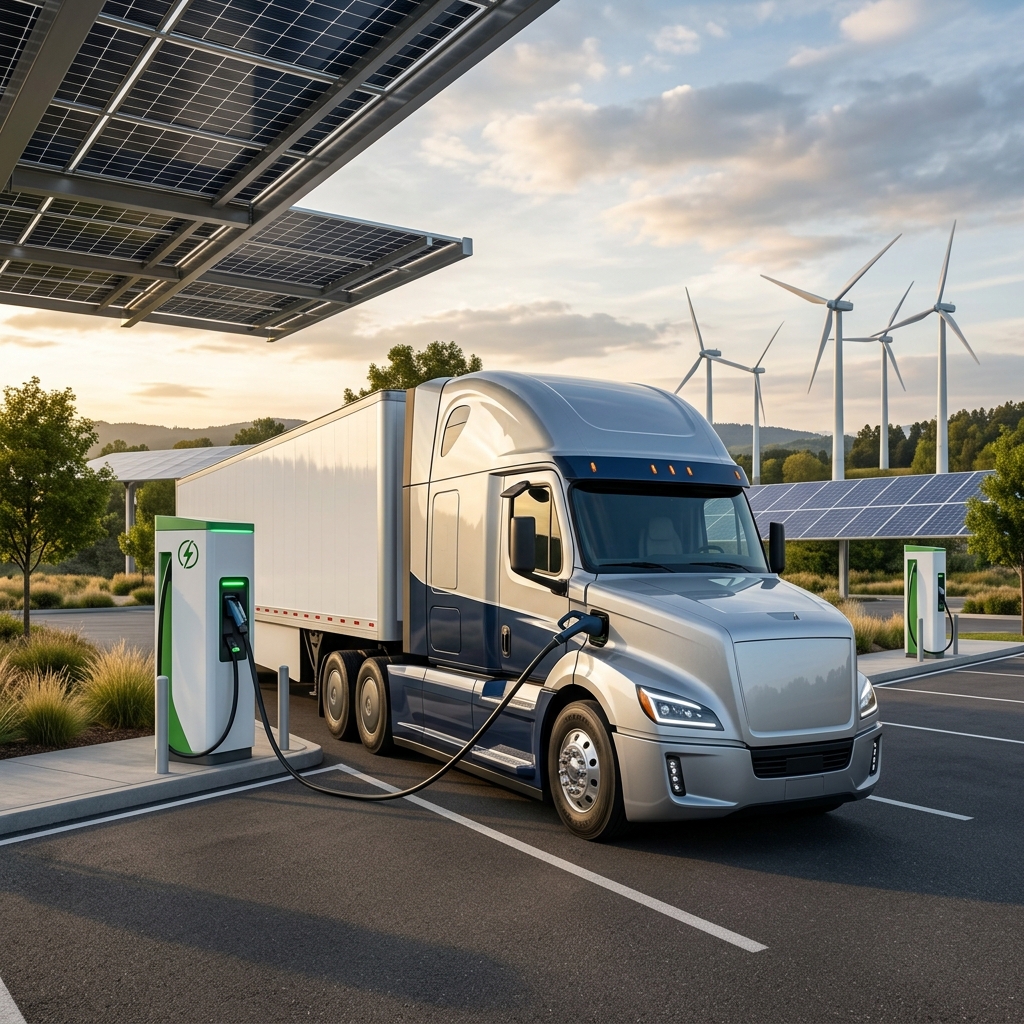
The true infrastructural challenge lies at the depot. Transitioning a fleet to electric power requires massive upgrades to the logistics facility's electrical grid. Installing high-capacity fast chargers, implementing smart-charging software to draw power during off-peak tariff hours, and potentially integrating solar arrays onto the expansive warehouse rooftops are critical steps. MJP Logistics is investing heavily in analyzing these grid upgrades for our Hoppers Crossing facility to ensure we can sustain a scalable electric fleet without destabilizing local power grids.
The transition to green logistics provides a profound competitive advantage. Businesses partnering with an ESG-compliant transport provider like MJP Logistics can immediately report a massive reduction in their Scope 3 emissions, drastically improving their own corporate sustainability reports. By leading the charge in sustainable freight, we ensure that our operations—and by extension, the operations of our clients—remain commercially dominant and environmentally unassailable in the rapidly evolving regulatory landscape.